Why a Small Flock of Hens Is a Smart Choice for Your House and Garden
A few hens can turn an ordinary backyard into a more productive, circular, and lively space. They scratch through leaf litter, eat many common pests, add rich material to the compost pile, and reward good care with fresh eggs.
For anyone drawn to sustainable living or backyard farming, hens offer something rare: they are useful in several ways at once. A small flock does not need to take over the whole yard, either. With a safe coop, a sensible routine, and a garden plan that protects tender plants, three to six hens can fit beautifully into many home landscapes.

Hens make the garden work harder in a good way
Chickens are busy animals. Left to their own rhythm, they scratch, peck, dust bathe, and explore. In a garden, those natural habits can become a real advantage.
They help control common pests
Hens eat a wide range of insects and larvae. They are especially useful in areas with slugs, beetles, grubs, earwigs, and other garden pests. They will also pick through fallen fruit where insects gather.
This does not mean hens should roam through every bed at all times. A chicken does not know the difference between a cabbage worm and a baby lettuce seedling. The trick is to let them work where their scratching helps rather than hurts.
Good times to invite hens into garden areas include:
After a crop has finished
Before planting a new bed
Around established shrubs or fruit trees
In a fenced orchard area after fruit has been collected
In compost areas where scratching turns material naturally
Their pest control is not instant or complete, but it reduces pressure in a low-input way. It also cuts back on the need for sprays, which suits gardens built around soil health and biodiversity.
They turn waste into fertility
A backyard flock is a small compost partner. Hens eat many kitchen scraps, such as vegetable trimmings, stale bread in small amounts, cooked plain grains, and bruised fruit. They also scratch through weeds, old bedding, grass clippings, and fallen leaves.
What comes out the other end is useful too. Chicken manure is rich, especially in nitrogen. It can be a real gift to the garden when handled properly.
Fresh chicken manure is too strong for most plants and can carry harmful bacteria. Add it to a compost pile with carbon-rich materials such as:
Dry leaves
Straw
Wood shavings
Shredded paper
Chopped garden stems
Let the pile break down well before using it on food crops. Finished compost should look dark, crumbly, and smell earthy. Once ready, it can feed vegetable beds, berry patches, fruit trees, and ornamental gardens.
A small flock turns everyday scraps, bedding, and garden leftovers into compost ingredients instead of household waste.
They provide fresh eggs close to home
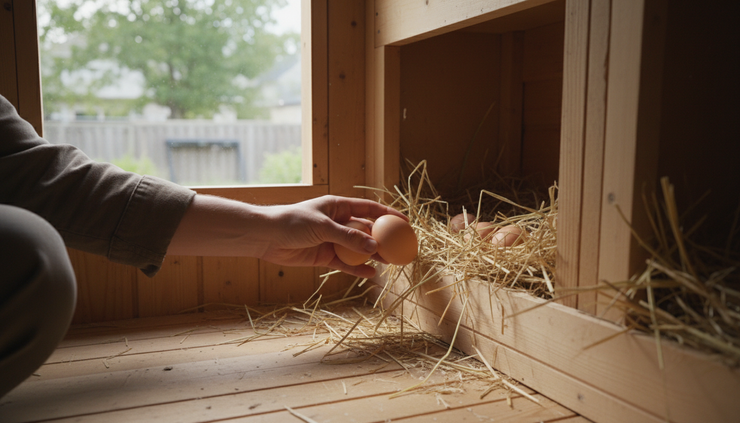
Fresh eggs are one of the obvious joys of keeping hens. The yolks are often rich in colour, and it is satisfying to collect breakfast from the backyard.
Egg production varies by breed, age, daylight, diet, and season. Many hens lay well in spring and summer, then slow down during the darker months. In much of Canada, winter light and cold can reduce laying unless the birds have excellent care and, in some flocks, supplemental light.
Even with seasonal dips, a small flock can supply a household with a steady number of eggs for much of the year. The bigger reward is knowing how the hens are kept, what they eat, and how fresh the eggs are.
The right breeds make flock life easier
Breed choice matters. Some hens are calm and steady. Some are flighty. Some handle cold better than others. Some lay many eggs but may be less suited to close backyard living.
For a small home flock, look for breeds known for being friendly, hardy, and reliable layers. In many parts of Canada, cold tolerance is also important. Birds with smaller combs are less prone to frostbite than breeds with large combs, though good coop design matters just as much.
Breed | Why it suits a small flock | What to keep in mind |
Plymouth Rock | Hardy, calm, good layers, often friendly | They enjoy space to forage |
Rhode Island Red | Productive layers, hardy, confident birds | Can be assertive in mixed flocks |
Sussex | Gentle, curious, good foragers | May become very people-oriented |
Buff Orpington | Calm, fluffy, cold-hardy, good temperament | Heavier birds can be less heat tolerant |
Wyandotte | Cold-hardy, attractive, steady layers | Some lines are more independent |
Australorp | Good layers, usually calm, adaptable | Need shade and water in hot weather |
A mixed flock can work well. It also makes birds easier to identify. That helps with health checks, egg tracking, and noticing personality changes.
Before buying chicks or pullets, check local bylaws. Many municipalities allow hens but not roosters. Some limit flock size, coop placement, or require setbacks from property lines. Rules can vary even between neighbouring towns.
For most backyard setups, hens are the better choice than roosters. Hens lay eggs without a rooster, and the flock will be quieter. Roosters can be useful in rural settings, but they are often not allowed in residential areas.
Basic care starts with safety, shelter, food, and water
Hens are not hard to care for, but they do need daily attention. A healthy flock depends on a few basics done consistently.
Build or buy a secure coop
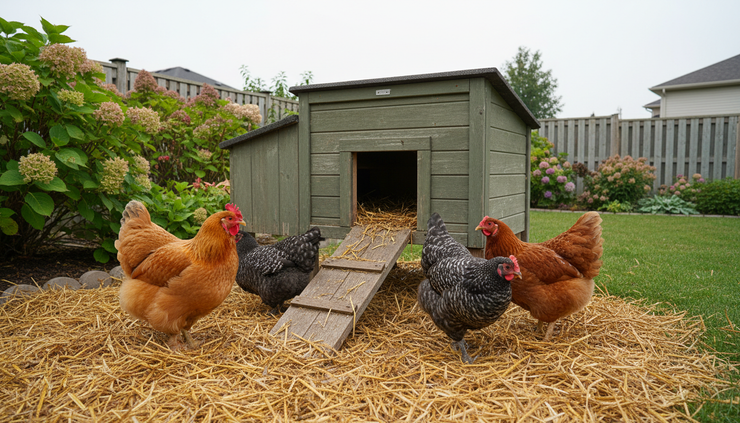
The coop should protect hens from wind, wet weather, extreme temperatures, and predators. In Canada, this means thinking carefully about winter. The goal is not to heat the coop like a house. The goal is to keep it dry, draft-free at bird level, and well ventilated above them.
Moisture causes more trouble than cold. Damp air can contribute to frostbite and respiratory problems. A good coop has vents near the top so humid air can escape, while roosting birds stay out of direct drafts.
A practical coop needs:
Enough indoor space for the flock
Roost bars higher than the nest boxes
One or more nest boxes in a quiet spot
Easy access for cleaning
Strong latches that raccoons cannot open
Hardware cloth instead of flimsy chicken wire for predator protection
A dry floor with absorbent bedding
Chicken wire keeps chickens in, but it does not reliably keep predators out. Hardware cloth is stronger and safer for windows, vents, and run walls.
Give them a protected outdoor run
Even if hens free-range sometimes, a secure run is useful. It gives them outdoor time when garden beds need protection or when no one is home.
The run should have shade, dry ground, and places to perch or explore. A roof or partial cover helps keep snow and rain out. In areas with hawks, a covered run is a major safety feature.
If the ground gets muddy, add coarse wood chips, dry leaves, straw, or sand, depending on drainage. Muddy runs are hard on feet and can smell unpleasant.
Feed them properly
A complete layer feed should be the base of the diet for laying hens. It provides the protein, minerals, and vitamins they need. Kitchen scraps and garden greens are treats, not the main meal.
Offer oyster shell or another calcium source separately so hens can take what they need for strong eggshells. Grit is also useful if birds eat whole grains, grass, or forage, since it helps them grind food.
Avoid feeding hens spoiled food, salty leftovers, raw potato peels, chocolate, caffeine, and anything mouldy. Keep feed dry and stored in a rodent-resistant container.
Keep water clean year-round
Clean water is non-negotiable. In summer, hens drink more and need shade to stay comfortable. In winter, water can freeze quickly. A heated poultry waterer or safe heated base can make cold-weather care much easier.
Check water daily. A flock can go through water faster than expected, especially during hot spells or when egg production is high.
Garden integration works best with boundaries
Hens and gardens can be wonderful partners, but only if the system has rules. Without boundaries, chickens will dig up seedlings, scatter mulch, dust bathe in soft beds, and sample ripe tomatoes before anyone else gets to them.
The best setup gives hens access to the right areas at the right times.
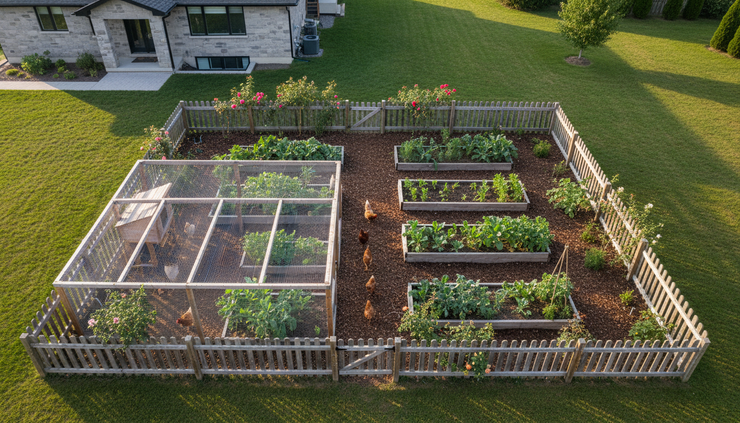
Use movable fencing
Lightweight poultry netting or temporary fencing lets hens work one section at a time. This is ideal for rotating them through spent beds, weedy corners, or orchard edges.
A rotation system gives each area time to recover. It also prevents hens from stripping one patch down to bare soil.
Protect young plants
Seedlings need defence. Use row covers, cloches, hoops with netting, or low fencing around newly planted beds. Once plants are mature, hens may be allowed nearby, but leafy greens and soft fruit still need protection.
Raised beds help too. They create clean lines and make it easier to block off sensitive areas.
Let hens clean up at the end of the season
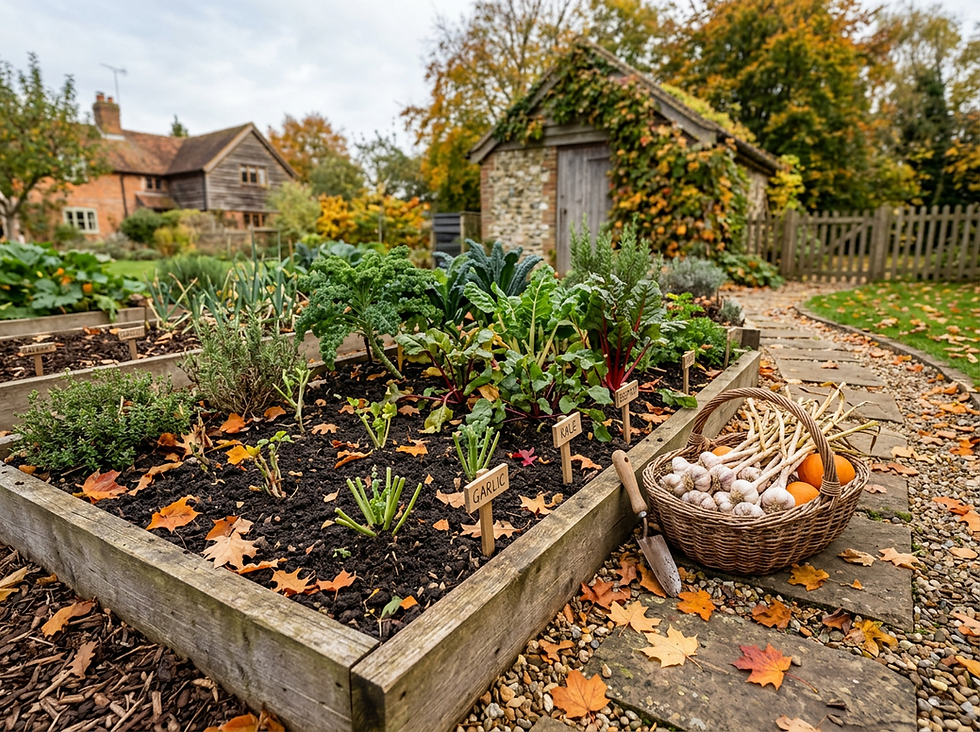
After harvest, hens can scratch through old beds and eat leftover greens, seeds, and insects. They help break down plant material and expose pests hiding in the soil surface.
This is one of the easiest ways to use hens in a vegetable garden. The crops are done, so there is less risk of damage.
Set up a compost zone they can access
A chicken-friendly compost area can be simple. Use a contained pile or bin system with a section hens can reach. Add bedding, leaves, grass clippings, and approved kitchen scraps. The hens will turn the top layers as they scratch.
Keep the pile balanced. Too much wet food waste can smell and attract pests. Dry carbon materials keep it airy and pleasant.
Create chicken tunnels for controlled movement
Chicken tunnels, often called chunnels, are narrow fenced runs that guide hens along garden edges or between zones. They allow birds to patrol borders without giving them full access to beds.
These work especially well around vegetable gardens, berry patches, or along fence lines where insects gather.
A small flock brings daily rhythm to the home
The practical benefits are strong, but they are not the whole story. Hens add a gentle routine to a home. Morning feeding, egg collecting, and evening lock-up become small anchors in the day.
They also make the garden feel more alive. Hens have distinct personalities. One may follow closely while another hunts for worms with total focus. One may claim the best dust bath spot. Another may announce every egg as if it were major news.
This daily contact can also make food feel less abstract. Eggs come from animals that need care. Compost comes from scraps, bedding, manure, air, and time. Soil health becomes something visible and active.
That awareness is one reason backyard hens fit so well into sustainable living. They connect the kitchen, the garden, and the household in a practical loop.
Plan before the hens arrive
A little planning prevents most common problems. Before bringing hens home, walk through the setup as if the flock already lives there.
Ask a few practical questions:
Where will the coop sit so it stays dry?
How will snow, rain, and spring melt drain away?
Can predators dig under the run?
Is there shade in summer?
Is the coop close enough for daily care in bad weather?
Where will feed and bedding be stored?
How will the hens be kept out of new plantings?
What will happen when the flock slows down with age?
That last question matters. Hens can live for years after peak laying slows. A thoughtful flock plan includes long-term care, not just egg production.
Start small if this is a first flock. Three or four hens are usually easier to manage than a larger group, and they still provide plenty of manure, companionship, and eggs. A small flock of hens can benefit your house and garden without overwhelming the space.
The real value is a healthier backyard system
Hens are not a shortcut to a perfect garden. They need protection, daily care, and a setup that respects both the birds and the plants. But when the flock is planned well, the benefits are wide-ranging.
They eat pests. They help process scraps. They provide manure for compost. They lay fresh eggs. They bring movement, sound, and character to the backyard.
The smartest approach is to design the garden and chicken area together. Give hens secure housing, controlled access, and meaningful work. Protect delicate crops when needed. Compost their bedding and manure with care. Choose breeds that match the climate, the space, and the household routine.
With those pieces in place, a small flock becomes more than a source of eggs. It becomes part of a living system, one that makes the house, garden, and daily table feel more connected.


Comments