Soil Mixtures Made Easy Healthy Blends for Thriving Plants
A plant can survive a missed watering, a cloudy week, or a little neglect. Poor soil is harder to forgive. Roots live in that hidden world, and if the mix is too dense, too dry, too wet, or too low in nutrients, the whole plant feels it.
Good soil does more than hold a plant upright. It stores moisture, releases nutrients, lets air reach the roots, and supports the tiny organisms that help plants grow. Once that makes sense, mixing soil at home starts to feel less like a mystery and more like cooking. A little compost for nutrition, peat or coir for moisture, perlite for air, and suddenly the recipe has a purpose.
The best part is that soil blends are easy to adjust. A tomato in a raised bed, a snake plant in a pot, and a tray of basil seedlings do not need the same mix. Learning a few basic ingredients and ratios makes it much easier to give each plant what it likes.
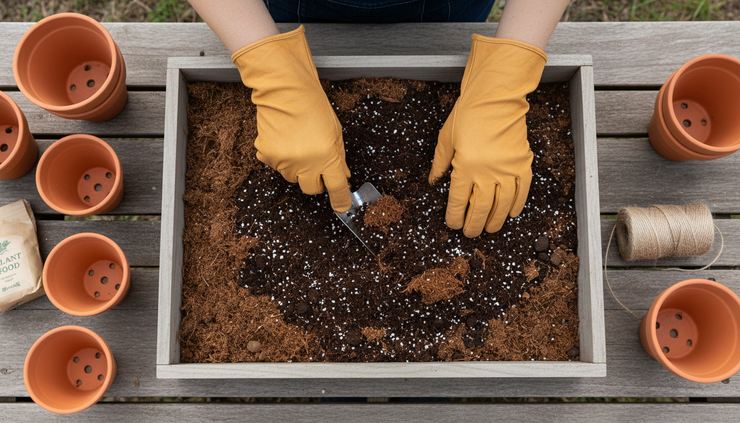
Healthy soil gives roots what they need
Soil health starts with balance. Roots need moisture, but they also need air. They need nutrients, but not a heavy, sour mix that stays wet for days. A good blend creates tiny pockets where water and oxygen can both move.
When soil works well, several things happen:
Roots spread more easily.
Water soaks in instead of pooling on top.
Excess moisture drains away before roots rot.
Nutrients become available over time.
Beneficial microbes and fungi have a place to live.
Garden soil outdoors can improve over time with compost, mulch, and cover crops. Potting mixes are different. Containers have limited space, and water cannot drain sideways into the surrounding ground. That means a potting blend must be lighter, airier, and more carefully built than regular garden soil.
A common mistake is filling containers with soil dug from the yard. It may look rich, but in a pot it often compacts. Once compacted, it squeezes out air and makes watering harder. Plants may wilt even when the soil is damp because damaged roots cannot use the water well.
Think of a soil mix as a root habitat. The goal is not to make it “rich” in every possible way. The goal is to match the blend to the plant.
The main ingredients are simple
Most homemade soil mixtures use a short list of ingredients. Each one has a job. Once the jobs are clear, recipes become easier to adjust.
Compost feeds the soil
Compost adds slow-release nutrients and improves texture. It also brings organic matter, which helps soil hold moisture without becoming lifeless and compacted.
Use finished compost that smells earthy, not sour or rotten. It should look dark and crumbly, with no large chunks of food scraps. If compost is not fully broken down, it can tie up nitrogen or attract pests.
Good uses for compost include:
Vegetable beds
Outdoor containers
Flower planters
Houseplant mixes in small amounts
Soil improvement around perennials and shrubs
For seed starting, use compost carefully. Some compost is too rich or uneven for delicate seedlings. A fine, screened compost is best if adding any at all.
Peat holds moisture
Peat moss is light, fluffy, and excellent at holding water. It also helps create a soft texture that roots can move through. Many commercial potting mixes use peat as a base.
There are two things to know before using it. Dry peat can resist water at first, so moisten it before blending. Peat is also naturally acidic, which suits some plants but not all. For general garden use, many gardeners balance peat-based mixes with compost and other ingredients.
Peat harvesting raises environmental concerns because peatlands form slowly and store carbon. If that matters for a project, coconut coir is a common alternative. Coir also holds water well, though it behaves a little differently and may need rinsing if it is high in salts.
Perlite adds air and drainage
Perlite is the small white material seen in many potting mixes. It is a heated volcanic glass that becomes light and porous. Its job is not to feed plants. Its job is to keep the mix open.
Perlite is especially useful for:
Indoor pots
Succulents
Herbs
Seedlings
Any plant that hates soggy roots
It can be dusty, so moisten it lightly before mixing and avoid breathing in the dust. A simple mask helps when handling a large bag.
Other useful add-ins have specific roles
A few extra ingredients can fine-tune a blend.
Ingredient | What it does | Best use |
Vermiculite | Holds moisture and some nutrients | Seed starting, moisture-loving plants |
Coarse sand | Adds weight and drainage | Cacti, succulents, Mediterranean herbs |
Bark fines | Improves structure and airflow | Orchids, aroids, long-lasting pot mixes |
Worm castings | Adds mild nutrients and biology | Houseplants, vegetables, seedlings in small amounts |
Garden lime | Raises pH in acidic mixes | Peat-heavy blends for vegetables and flowers |
The best ingredients are consistent, clean, and suited to the plant. Avoid soil from areas treated with herbicides, compost with a strong ammonia smell, and sand from roadsides or beaches.
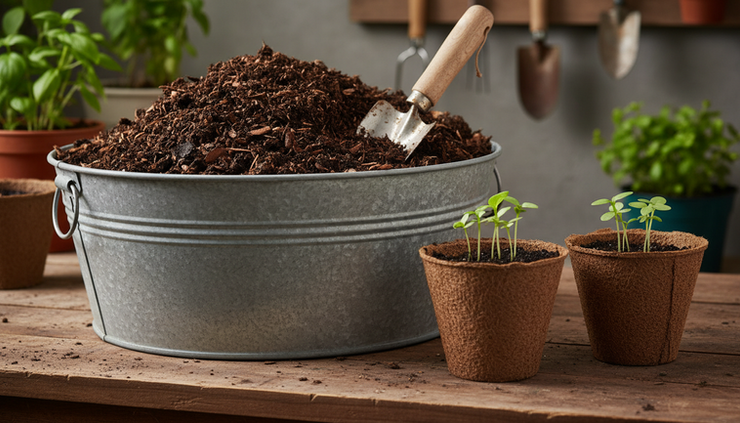
Easy homemade soil recipes for common plants
Use “parts” instead of exact measurements. One part can be a scoop, bucket, bowl, or litre, as long as the same measure is used throughout. Before potting, moisten the mix until it feels like a wrung-out sponge.
A general container mix works for most potted plants
This is the all-purpose blend to keep in the shed or on the balcony. It works for many annual flowers, leafy houseplants, patio vegetables, and mixed planters.
Recipe
2 parts compost
2 parts peat moss or coconut coir
1 part perlite
This mix holds enough moisture for steady growth but still drains well. Compost brings nutrients, peat or coir keeps the root zone evenly damp, and perlite prevents the container from becoming heavy and airless.
Best for:
Petunias, marigolds, pansies, and geraniums
Basil, parsley, and cilantro
Lettuce and leafy greens in containers
Pothos, philodendron, and peace lily
For indoor use, reduce compost slightly if fungus gnats tend to appear. A blend with more perlite and less compost often stays cleaner indoors.
A vegetable garden blend supports heavy feeders
Vegetables such as tomatoes, peppers, cucumbers, squash, and kale need a fertile mix. They grow quickly and pull a lot from the soil.
Recipe
3 parts screened compost
2 parts garden soil or high-quality topsoil
1 part peat moss or coir
1 part perlite
This blend suits raised beds and large outdoor containers. The compost feeds soil life and improves fertility. Topsoil adds mineral content and body. Peat or coir helps with moisture, while perlite keeps the bed from settling too tightly.
Best for:
Tomatoes
Peppers
Cucumbers
Kale and chard
Beans and peas
For tomatoes in large pots, add extra perlite if the container is plastic and holds water. In fabric grow bags, the same mix may dry faster, so keep more moisture-holding material in the blend.
A seed-starting mix protects tender roots
Seeds do not need rich soil at first. They need a fine, clean, evenly moist medium that does not crust over.
Recipe
2 parts peat moss or coir
1 part vermiculite
1 part perlite
Optional small handful of fine compost per 4 litres of mix
This mix stays light and gentle. Vermiculite holds moisture close to germinating seeds. Perlite creates air space. Peat or coir gives the mix structure.
Best for:
Tomatoes and peppers started indoors
Lettuce and brassica seedlings
Annual flowers
Herbs such as basil and dill
Once seedlings develop true leaves, begin feeding lightly or transplant them into a richer mix. A seed-starting blend is not meant to support mature plants for long.
A succulent and cactus mix prevents soggy roots
Succulents store water in their leaves and stems. They need a mix that drains quickly and dries faster than a standard potting soil.
Recipe
2 parts potting mix or compost-based container mix
1 part perlite
1 part coarse sand or fine grit
This blend reduces the risk of root rot. The potting mix provides a small amount of organic matter. Perlite and grit create large pore spaces so water moves through fast.
Best for:
Aloe
Jade plant
Echeveria
Sedum
Cacti
Use a pot with drainage holes. Even the best cactus mix struggles in a sealed decorative pot.
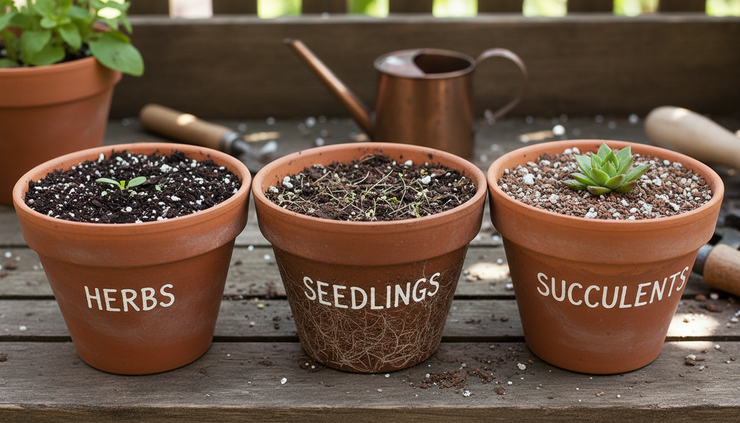
A herb mix keeps flavourful plants happy
Many herbs dislike sitting in wet soil. Mediterranean herbs prefer a leaner, sharper-draining blend, while leafy herbs enjoy more moisture.
For rosemary, thyme, oregano, sage, and lavender:
2 parts potting mix
1 part compost
1 part perlite
1 part coarse sand
For basil, parsley, cilantro, and mint:
2 parts compost
2 parts peat or coir
1 part perlite
The first blend drains quickly and keeps woody herbs from sulking in damp roots. The second offers more moisture for leafy herbs that grow fast and need steady water.
Mint deserves its own pot. It spreads aggressively in garden beds, but it grows beautifully in a container with a moisture-retentive mix.
How to choose the right blend for each plant
The easiest way to choose a soil mix is to picture the plant’s natural preference.
Plants with thick, fleshy leaves usually want faster drainage. Plants with lush, tender leaves often want more moisture. Plants grown for fruit and vegetables usually need more compost and fertility. Seedlings need the finest, lightest mix.
Use these clues before mixing:
If the plant wilts quickly in dry soil, add more peat, coir, compost, or vermiculite.
If leaves yellow and the pot stays wet, add more perlite, bark fines, or coarse sand.
If the mix shrinks away from the pot edge, it may be too peat-heavy and too dry. Rehydrate slowly.
If water runs straight through, the mix may be too coarse or completely dried out.
If the plant grows leaves but no flowers or fruit, the mix may be too rich in nitrogen, or the plant may need more sun.
Climate matters too. In much of Canada, outdoor containers can swing from cool spring nights to hot midsummer afternoons. Dark plastic pots warm and dry differently than clay pots. Balcony containers may dry quickly in wind. A blend that works in a shaded backyard may need more water-holding material on a sunny deck.
Mix soil in small batches first
Homemade mixes are forgiving, but large batches can become a storage problem. Start with enough for a few pots. Test how it waters, drains, and feels after a week.
A good potting mix should feel light, springy, and slightly moist. When squeezed, it should hold together loosely, then crumble when touched. If it forms a dense mud ball, add perlite or bark fines. If it falls apart like dust, add compost, peat, coir, or vermiculite.
A simple mixing method helps:
Moisten dry peat or coir before adding it.
Screen compost if using it for pots or seedlings.
Combine dry ingredients in a tub or wheelbarrow.
Add water slowly and mix by hand or with a trowel.
Let the blend sit for 15 minutes, then check moisture again.
Wear gloves if compost irritates the skin. If using perlite, open the bag outdoors when possible and dampen it to reduce dust.
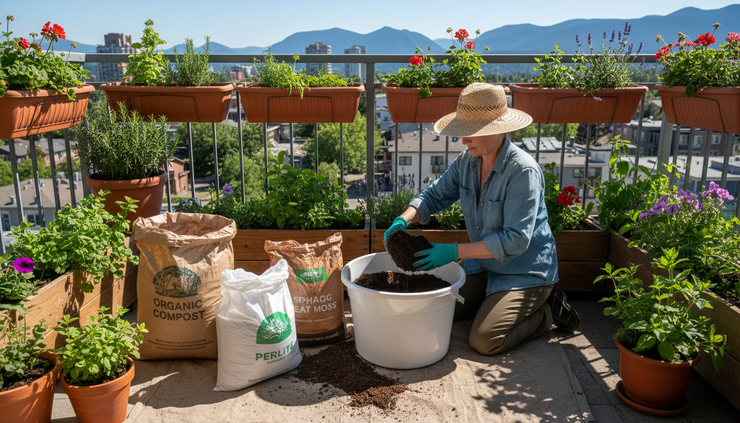
Small adjustments make better blends
Soil mixing becomes easier with observation. The first recipe does not need to be perfect. Plants give feedback.
If a houseplant produces soft, weak growth, reduce compost and improve light. If a tomato dries out every afternoon, add more moisture-holding material and mulch the surface. If a succulent drops leaves from the base and the soil stays damp, repot into a grittier mix.
Keep notes on blends that work. A piece of masking tape on a bin can be enough:
`2 compost, 2 coir, 1 perlite for patio greens`
Over time, these notes become more useful than any one-size-fits-all recipe. They reflect the pots, watering habits, light, and plants in a real garden.
For outdoor beds, soil health also improves from the top down. Add compost as a surface layer, use organic mulch, avoid walking on growing areas, and leave roots in place when possible at the end of the season. These habits protect structure and feed soil life.
A few common mistakes to avoid
Even simple blends can go wrong when one ingredient does too much of the work.
Avoid these common problems:
Too much compost in indoor pots, which can hold excess moisture and attract gnats.
Too much peat without wetting it first, which can make water bead off the surface.
Fine sand in containers, which can turn a mix dense instead of improving drainage.
No drainage holes, which can ruin even a well-built blend.
Reusing old potting mix without refreshing it.
Old potting mix can be reused if the previous plant was healthy. Remove old roots, fluff the mix, and add fresh compost plus perlite. If a plant had disease or serious pest issues, discard that mix rather than spreading the problem.
Start with one recipe and adjust from there
Soil mixtures do not need to be complicated. Compost feeds. Peat or coir holds moisture. Perlite brings air. Sand, bark, vermiculite, and worm castings make small adjustments for special needs.
Start with one simple container mix, then change it based on the plant. Add drainage for succulents and woody herbs. Add fertility for vegetables. Keep seedlings light and fine. With a few basic ingredients and a little observation, homemade soil becomes one of the easiest ways to grow stronger, healthier plants.


Comments