Easy Indoor Herbs to Grow This Winter for Fresh Flavor
Winter cooking can start to feel a little flat when the garden is frozen, the farmers’ market has fewer fresh greens, and every meal leans on dried seasonings. A few pots of herbs on a sunny windowsill can change that quickly.
Indoor herbs do not need a greenhouse, a large budget, or years of gardening experience. Many will grow happily in a kitchen, on a shelf near a bright window, or under a simple grow light. The reward is immediate and practical: a handful of basil for pasta, parsley for soup, mint for tea, or chives for baked potatoes on a cold night.
This guide covers easy herbs to grow indoors through a Canadian winter, plus the light, water, and care they need to stay healthy.
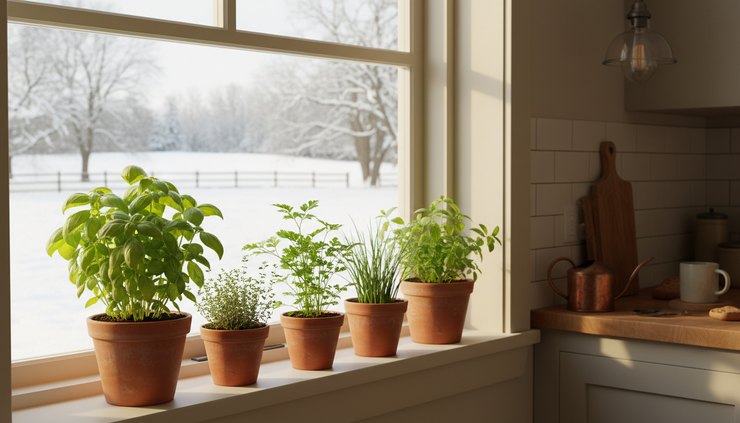
Why indoor herbs are worth growing in winter
Fresh herbs do more than make food look pretty. They lift simple meals with colour, scent, and flavour. A pot of parsley can brighten a lentil soup. A few basil leaves can make canned tomatoes taste fresher. Mint can turn hot water and lemon into a soothing evening drink.
Indoor gardening also gives winter a small sense of growth. When outdoor beds are covered in snow or soil is frozen solid, a windowsill herb garden brings a bit of green into the home.
A few practical benefits stand out:
Fresh flavour on demand
Pick only what is needed, right before cooking.
Less food waste
Store-bought herb bunches often wilt before they are finished. Living plants keep growing when cared for well.
Small-space friendly
Most culinary herbs grow well in containers, so a kitchen ledge or apartment shelf can be enough.
Beginner friendly
Herbs are forgiving compared with many vegetables. They usually show clear signs when they need more light, less water, or a trim.
Winter does create challenges. Short days, dry indoor air, and chilly windows can slow growth. The key is choosing herbs that suit indoor conditions and giving them the basics consistently.
Set up a simple winter herb garden
Indoor herbs need three main things: light, drainage, and steady care. Get those right and the rest becomes easier.
Choose the brightest spot
Most herbs prefer at least 4 to 6 hours of bright light each day. In winter, a south-facing window is often best. East-facing windows can work for herbs that tolerate lower light, such as mint and parsley. North-facing windows are usually too dim unless a grow light is added.
If plants lean toward the window, rotate the pots every few days. This keeps growth more even.
A grow light can help a lot in December, January, and February. It does not need to be complicated. A full-spectrum LED grow light placed above the plants for several hours a day can make the difference between weak, leggy stems and steady growth.
Use pots with drainage
Herbs dislike sitting in soggy soil. Use containers with drainage holes and place saucers underneath to catch extra water. If a decorative pot has no hole, keep the herb in a plastic nursery pot inside it and remove the plant for watering.
Choose a light potting mix made for indoor containers. Garden soil from outside is usually too dense for pots and may bring in pests.
Water carefully
Overwatering is one of the most common indoor herb problems. The top 2 to 3 cm of soil should dry slightly between waterings for most herbs. Mint likes a bit more moisture, while rosemary and thyme prefer to dry out more.
A simple test works well: touch the soil. If it feels damp, wait. If it feels dry at the top, water slowly until a little drains from the bottom.
Keep plants away from extremes
Indoor herbs do best in steady conditions. Keep them away from cold drafts, icy window glass, hot radiators, and heating vents. Many homes in winter have dry air, so herbs may dry faster than expected.
If leaves look crispy at the edges, check the plant’s distance from heat sources and review watering habits.
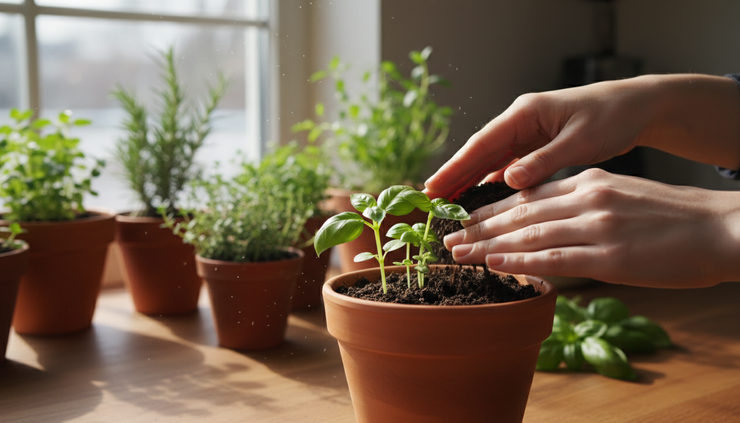
The best easy herbs to grow indoors this winter
These herbs are reliable choices for indoor growing. Some grow faster than others, and a few need more light, but all can fit into a small winter herb garden.
Herb | Best light | Water needs | Best uses |
Basil | Bright light or grow light | Keep lightly moist | Pasta, pizza, eggs, tomato dishes |
Parsley | Bright to moderate light | Keep evenly moist | Soups, salads, roasted vegetables |
Mint | Moderate to bright light | Keep moist, not soggy | Tea, desserts, sauces, drinks |
Chives | Bright light | Moderate water | Potatoes, eggs, dips, soups |
Thyme | Bright light | Let soil dry slightly | Roasted vegetables, chicken, stews |
Rosemary | Very bright light | Let soil dry between waterings | Roasts, bread, potatoes |
Cilantro | Bright light, cooler spot | Keep evenly moist | Tacos, curries, rice dishes |
Basil
Basil is one of the most popular indoor herbs because its flavour is so fresh and familiar. It loves warmth and bright light, which can make winter growing a little more demanding, but it is worth the effort.
Place basil in the brightest window available or under a grow light. Keep it away from cold glass, especially overnight. Basil does not enjoy chilly drafts.
Water when the top of the soil begins to dry, but do not let the plant wilt repeatedly. Pinch off the top leaves often to encourage bushier growth. If flower buds appear, remove them so the plant keeps making leaves.
Benefits in the kitchen
Basil brings sweet, peppery flavour to pasta, pizza, sandwiches, tomato soup, scrambled eggs, and grain bowls. Even two or three leaves can make a quick meal feel fresher.
Parsley
Parsley is sturdy, useful, and often easier indoors than people expect. Flat-leaf parsley has a stronger flavour for cooking, while curly parsley adds texture and colour.
Parsley likes bright light but can handle slightly less light than basil. Keep the soil evenly moist, not wet. It grows from the centre, so harvest outer stems first by cutting them near the base.
This herb can grow slowly from seed, so winter beginners may prefer to start with a small plant from a garden centre or grocery store.
Benefits in the kitchen
Parsley adds clean, grassy flavour to soups, stews, salads, rice, roasted carrots, and fish. It is especially good for balancing rich winter meals.
Mint
Mint is one of the easiest herbs to grow indoors. It tolerates moderate light and grows quickly when kept moist. It also smells wonderful when brushed or trimmed.
Grow mint in its own pot. Outdoors, mint spreads aggressively, and indoors it still appreciates space. Keep the soil lightly moist and harvest stems regularly to stop the plant from getting too tall and sparse.
If the plant starts looking tired, cut stems back by about one-third. Mint usually responds with fresh growth.
Benefits in the kitchen
Mint is useful far beyond summer drinks. Add it to tea, hot chocolate, fruit, yogurt, lamb dishes, noodle bowls, or peas. It also pairs well with lemon and honey in warm winter drinks.
Chives
Chives are compact, mild, and very forgiving. They grow as thin green shoots and add a gentle onion flavour without overpowering a dish.
Give chives bright light and moderate water. Trim them with clean scissors, leaving about 5 cm of growth so the plant can keep producing. If growth slows, a brighter spot or grow light often helps.
Chives may go through a rest period if they were brought indoors from the garden. Give them time, and avoid overwatering while they recover.
Benefits in the kitchen
Chives are excellent on baked potatoes, omelettes, soups, dips, roasted squash, and cream cheese. They are also a good choice for anyone who wants onion flavour with less chopping.
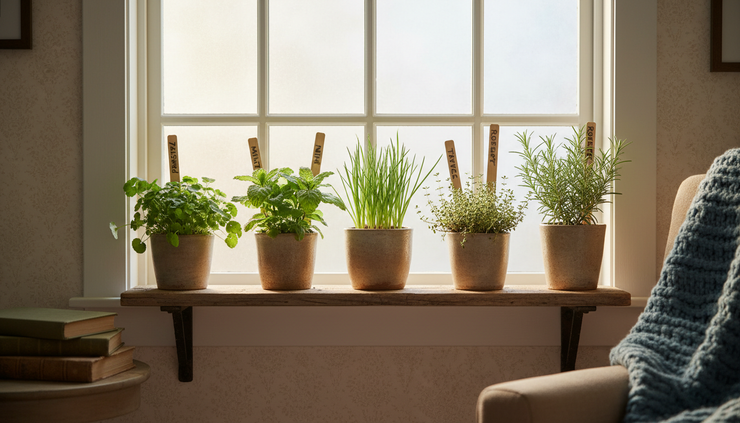
Thyme
Thyme is a compact herb with tiny leaves and strong flavour. It likes bright light and well-drained soil. Compared with parsley or mint, thyme prefers a drier routine.
Place thyme in a sunny window. Water only when the top few centimetres of soil feel dry. Good airflow helps prevent the stems from staying damp.
Harvest by snipping small sprigs. Avoid cutting deeply into old woody stems, since thyme regrows best from softer green growth.
Benefits in the kitchen
Thyme suits slow winter cooking. Add it to soups, roasted mushrooms, chicken, root vegetables, beans, and savoury breads. A little goes a long way.
Rosemary
Rosemary can be slightly fussier indoors, but it is still a good winter herb if it gets enough light. It likes bright sun, excellent drainage, and careful watering.
Set rosemary in your sunniest window or under a grow light. Let the soil dry somewhat between waterings. The biggest mistake is watering too often while the plant is growing slowly in winter.
Rosemary also dislikes sudden changes. If bringing a plant inside from outdoors, move it before hard frosts and check carefully for pests.
Benefits in the kitchen
Rosemary has a pine-like aroma that works beautifully with roasted potatoes, focaccia, chicken, turkey, carrots, and white beans. It also makes the kitchen smell inviting while it cooks.
Cilantro
Cilantro is a great choice for fresh flavour, though it behaves differently from woody herbs. It grows quickly, prefers cooler temperatures, and may bolt if it gets too warm or stressed.
Give cilantro bright light and steady moisture. Grow it in a slightly deeper pot because it has a taproot. For a steady supply, sow new seeds every few weeks rather than relying on one plant for months.
Harvest outer stems first, or cut small sections as needed. If the plant flowers, the leaves may become less tender, but the seeds can mature into coriander.
Benefits in the kitchen
Cilantro brightens tacos, curries, soups, rice bowls, beans, chutneys, and noodle dishes. It is ideal when heavy winter meals need a fresh finish.
Care tips that keep herbs productive
Once herbs are growing, small habits make a big difference. Indoor plants depend on you for the conditions they would normally find outdoors.
Harvest often, but not too much
Regular trimming encourages many herbs to grow fuller. The trick is to take enough to promote growth without stripping the plant.
A good rule is to harvest no more than one-third of the plant at a time. For leafy herbs like basil and mint, pinch just above a set of leaves. For parsley and chives, cut outer stems near the base.
Feed lightly
Herbs grown in pots use up nutrients over time. During winter, growth is slower, so they do not need heavy feeding. If plants are actively growing, use a diluted indoor plant fertilizer every few weeks. Follow the product label and avoid overdoing it, since too much fertilizer can lead to weak growth and less concentrated flavour.
Watch for pests
Indoor herbs can attract aphids, fungus gnats, or spider mites, especially in dry winter homes. Check under leaves and along stems when watering.
If pests appear, isolate the plant. Rinse leaves gently in the sink, remove badly affected stems, and let the soil dry to the right level between waterings. Fungus gnats often show up when soil stays too wet.
Refresh tired plants
Some herbs naturally slow down or become woody. Basil and cilantro are often best replaced after a while. Mint, chives, thyme, parsley, and rosemary can last longer with good care.
If a plant becomes leggy, move it to brighter light and trim it back gradually. If the soil seems compacted or water runs straight around the edges, repot into fresh potting mix.
How to use winter herbs in everyday cooking
The best way to enjoy indoor herbs is to keep them close and use them often. Do not save them for special meals. A few fresh leaves can improve ordinary weeknight cooking.
Try these simple ideas:
Stir chopped parsley into soup right before serving.
Add basil to grilled cheese, tomato sauce, or scrambled eggs.
Sprinkle chives over baked potatoes or creamy soups.
Steep mint leaves with lemon for a warm drink.
Toss thyme with roasted carrots, parsnips, or mushrooms.
Add rosemary to potatoes before roasting.
Finish tacos, lentils, or rice bowls with cilantro.
Fresh herbs are usually best added near the end of cooking, especially soft herbs like basil, parsley, mint, chives, and cilantro. Woody herbs such as thyme and rosemary can handle longer cooking and release flavour slowly.
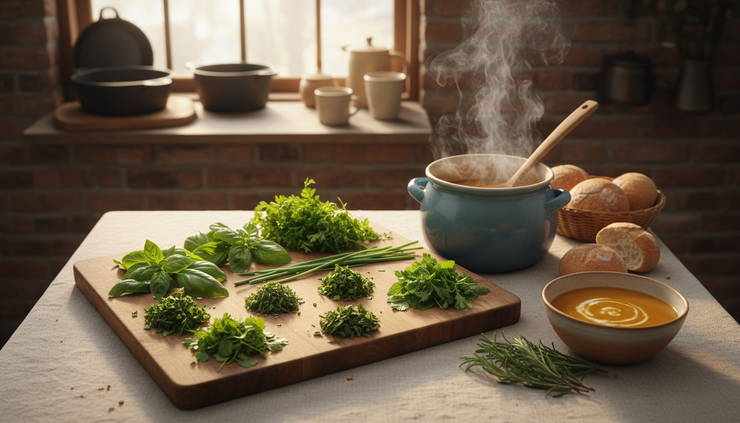
Start small and grow from there
A winter herb garden does not need to be perfect. Start with two or three herbs you already use often. Basil, parsley, and mint make a friendly first trio. Add chives, thyme, rosemary, or cilantro once you see how much light your space gets and how often you like to harvest.
Choose a bright spot, use pots with drainage, water with care, and trim regularly. Those simple habits can keep fresh flavour within reach all winter.
Even one healthy pot on the windowsill can change how you cook. Pick a herb, plant it, and let your next soup, pasta, or cup of tea taste a little more alive.


Comments