Drying Flowers Made Easy: Best Methods, Flower Picks, and Creative Uses
Fresh flowers have a short season, but dried flowers can stay beautiful for months, sometimes longer, with very little effort. A bouquet from the garden, a wedding centrepiece, or a few stems picked on a walk can become wall art, a handmade card, or a small reminder of a special day.
The trick is choosing the right method for the flower and the final project. Some blooms look best hanging upside down. Others keep their shape better in silica gel. Flat, delicate flowers are perfect for pressing. Once the flowers are dry, the creative options open up quickly.

Choose flowers that dry well
Not every flower dries with the same result. Thick, watery blooms often shrink, brown, or lose their shape. Flowers with lower moisture, sturdy petals, or papery texture usually dry best.
Good choices for drying include:
Lavender Keeps its scent and slender shape, great for bundles and sachets.
Roses Dry beautifully when picked before they fully open.
Strawflowers Naturally papery petals hold colour and form very well.
Statice A reliable choice for strong colour after drying.
Baby’s breath Light, airy, and easy to use in wreaths or bouquets.
Hydrangeas Best when dried later in the season, after the blooms feel slightly papery.
Pansies and violas Lovely for pressing because they flatten neatly.
Daisies and cosmos Press well, though their centres may keep some thickness.
Pick flowers on a dry day after morning dew has evaporated. Choose blooms that look fresh, with no bruised petals or browning edges. Drying preserves what is already there, so a damaged flower will not improve once dried.
Use air drying for simple bouquets and bundles
Air drying is the classic method, and it needs almost no special equipment. It works best for sturdy flowers and herbs with strong stems.
To air dry flowers:
Remove extra leaves from the stems.
Gather flowers into small bundles.
Tie the stems with twine or an elastic band.
Hang them upside down in a warm, dry, dark place.
Leave space between bundles so air can move around them.
A closet, spare room, basement shelf, or dry pantry can work if the space is not damp. Avoid sunny windows. Direct light fades petals, even when the flowers seem sturdy.
Most flowers take one to three weeks to dry, depending on size and humidity. They are ready when the stems feel stiff and the petals feel dry to the touch.

Press flowers for flat crafts and framed art
Pressing is the best method when you want flowers for cards, bookmarks, journals, candles, ornaments, or framed botanical art. Pressed flowers become thin and delicate, which makes them easy to glue, arrange, and seal.
The simplest method uses a heavy book:
Place flowers between two sheets of parchment paper.
Lay the parchment inside a heavy book.
Add more books or a weight on top.
Leave the flowers for one to three weeks.
Check gently before removing them.
For better results, arrange petals carefully before pressing. Once the weight is on, the flower will dry in that shape. If a petal folds awkwardly, it will stay that way.
A flower press works the same way but gives more even pressure. This helps when pressing several flowers at once.
Pressed flowers are fragile, so lift them with tweezers or the tip of a craft knife. Store them flat in a dry envelope or between sheets of paper until you are ready to use them.
Use silica gel when shape matters
Silica gel is excellent when you want blooms to keep more of their natural shape. It works especially well for roses, zinnias, dahlias, peonies, and other flowers with layered petals.
Despite the name, silica gel often looks like tiny crystals or sand. You can find it at many craft stores. Use a container with a lid, and choose one deep enough for the flower heads.
A basic silica gel method looks like this:
Pour a layer of silica gel into the container.
Place flowers face up on the layer.
Spoon more silica gel gently around and over the petals.
Cover completely without crushing the flower.
Seal the container and let it sit for several days.
The exact drying time depends on the flower size. Small flowers may dry quickly, while dense blooms need longer. Check gently. If petals still feel soft or cool, give them more time.
Silica gel can be reused if the package instructions say so. Many types can be dried out again in an oven, but follow the product label for safe handling.

Preserve colour and shape with a few smart habits
The best results come from small choices made before and after drying. Flowers fade naturally over time, but you can slow the process.
Use these tips to keep dried flowers looking their best:
Pick blooms at the right stage. Roses and peonies dry better before they fully open. Hydrangeas dry better when the petals already feel slightly dry.
Keep flowers out of direct sun. Sunlight is one of the fastest ways to lose colour.
Dry in a low-humidity space. Damp air can cause browning, drooping, or mould.
Handle dried flowers gently. Petals and stems become brittle once dry.
Use a light mist of unscented hairspray or floral sealant. This can help reduce shedding, especially with grasses and delicate petals.
Store unused flowers in a covered box. Keep them away from moisture, heat, and bright light.
For the most natural look, accept a little change. Pink may become dusty rose. Purple may deepen. White may turn cream. That soft shift is part of the charm.
Turn dried flowers into decor, crafts, and gifts
Once the flowers are ready, the fun begins. Dried flowers bring texture, colour, and a handmade feel to everyday spaces.
For home decor, try:
A dried bouquet in a ceramic vase
A seasonal wreath for a door or wall
A garland for a shelf, mantel, or window
Small bundles tied with ribbon and hung from hooks
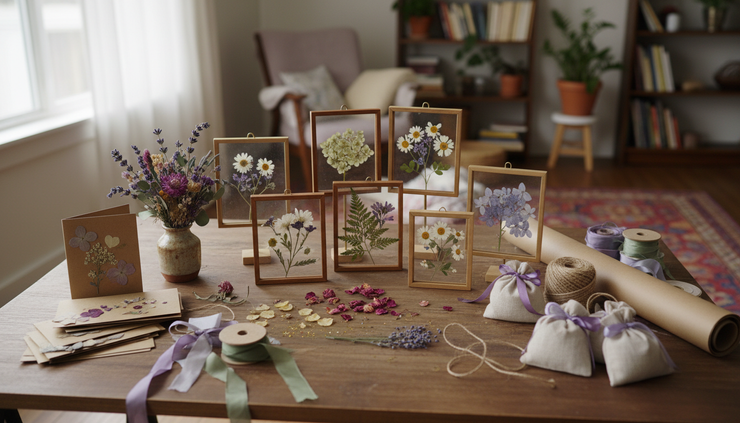
Pressed flowers framed between glass
For crafts, pressed flowers are especially useful. Add them to handmade cards, gift tags, bookmarks, place cards, journals, or clear ornaments. You can also arrange them under glass in a frame for simple botanical art.
For gifts, dried flowers feel personal without being complicated. Tuck a lavender sachet into a linen drawer. Tie dried blooms to a wrapped present. Create a mini bouquet for a host gift. Use flowers from a meaningful occasion to make a keepsake frame.
Drying flowers is simple once you match the method to the bloom. Hang sturdy stems, press delicate flowers, and use silica gel for full blooms you want to keep shapely. Start with a few stems, keep them out of sunlight, and make something small. One dried rose, pressed pansy, or lavender bundle is often enough to spark the next project.


Comments