Daffodils in Spring Gardens Varieties Planting Tips and Companion Ideas
Few flowers announce spring with as much confidence as daffodils. After months of bare branches, frozen soil, and muted colour, their yellow, white, orange, and peach cups feel like a promise kept. They are cheerful without being fussy, elegant without needing constant attention, and reliable enough to return year after year when planted well.
Daffodils also earn their place in the garden. They flower early, naturalize beautifully in many settings, and are often avoided by deer and rabbits because the bulbs and foliage contain compounds most animals dislike. That makes them especially useful in Canadian gardens where spring weather can swing from mild sun to late frost in the same week.
Whether you want a tidy front border, a woodland patch, a natural lawn planting, or a container by the door, daffodils offer more range than many gardeners expect.

Daffodil varieties bring more than yellow trumpets
Many people picture the classic golden trumpet daffodil, and for good reason. It is bold, useful, and easy to love. But daffodils belong to the genus Narcissus, and the range is wide. Flower shape, height, colour, scent, and bloom time all vary, which means a thoughtful mix can extend the show across several weeks.
Trumpet daffodils make a strong early statement
Trumpet daffodils have one flower per stem, with a central cup as long as, or longer than, the surrounding petals. These are the familiar, upright garden daffodils that look excellent in groups.
They work well:
Along walkways
Near front entrances
In mixed borders where early height matters
In drifts under deciduous trees
Their clean shape makes them easy to pair with low spring bulbs and fresh perennial foliage.
Large-cupped daffodils offer colour contrast
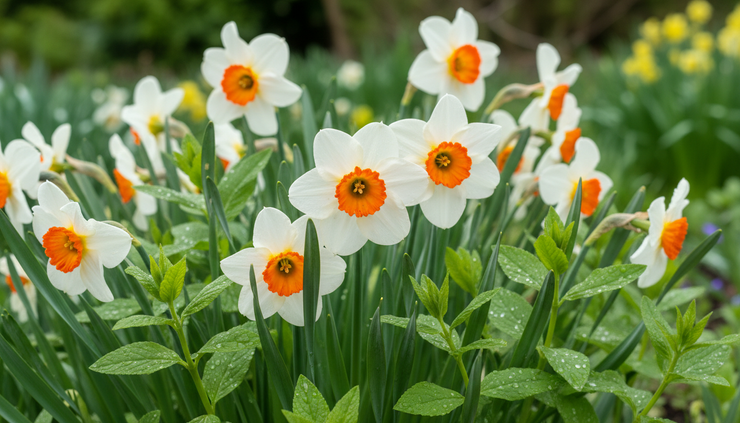
Large-cupped types also carry one bloom per stem, but the cup is shorter than the petals. This group brings many striking combinations, such as white petals with orange cups, pale yellow petals with apricot centres, or soft cream blooms edged in coral.
These varieties are useful when a garden needs a softer look than a bright yellow planting. They also bridge well between warm and cool colour schemes.
Small-cupped daffodils feel refined and graceful
Small-cupped daffodils have a more delicate look. Their cups sit neatly at the centre of broad petals, often with coloured rims or gentle contrast. In a formal border, they can look polished. In a cottage garden, they add detail without stealing attention from other plants.
Use them where they can be seen up close, such as beside a patio, front path, or raised bed.
Double daffodils add fullness and texture
Double daffodils replace the simple trumpet or cup with layered petals. Some look almost like small peonies or garden roses. Their texture is useful in bouquets and in beds where you want a richer, fuller effect.
Because heavy double blooms can droop after rain, plant them in sheltered spots. A location near a fence, shrub, or wall can protect them from strong spring wind.
Miniature daffodils suit containers and small spaces
Miniature daffodils, often including varieties like the well-known `Tête-à-Tête`, stay compact and bloom generously. They suit containers, rock gardens, edging, and small urban yards.
Their scale also makes them ideal for planting around stepping stones or at the front of a bed where taller varieties would look too large.
Poeticus and fragrant types bring scent and late bloom
Some daffodils bloom later and offer noticeable fragrance. Poeticus types often have white petals with a small, colourful cup, sometimes edged in red or orange. They can look wonderfully natural in meadow-style plantings or near woodland edges.
A mix of early, mid-season, and late types gives the garden a longer daffodil season. Instead of one short burst, the display unfolds in stages.
Planting and caring for daffodils starts in autumn
Daffodils are spring flowers, but the work begins months earlier. In most Canadian regions, plant bulbs in autumn once the soil has cooled but before it freezes hard. This gives bulbs time to root before winter.
Choose the right site
Daffodils grow best in well-drained soil. Wet, heavy soil can cause bulbs to rot, especially during freeze-thaw periods. If the site holds water after rain, improve drainage with compost or choose a raised bed.
They also prefer sun in spring. A spot under deciduous trees can work well because daffodils bloom before the tree canopy fills in. Avoid deep shade from evergreens or buildings, where flowering may become weak over time.
Plant at the proper depth
A simple rule works well for most bulbs: plant them about two to three times as deep as the bulb is tall. For many daffodils, that means roughly 10 to 15 cm deep. In colder regions, planting toward the deeper end can help protect bulbs.
Place each bulb with the pointed end up and the flatter root end down. Space bulbs close enough to make an impact, but not so close that they crowd each other immediately. Groupings of 7, 9, or more often look more natural than a single straight line.
Feed the soil, not just the bulb
Daffodils do not need rich feeding, but they do appreciate good soil. Work compost into the planting area before bulbs go in. If using bulb fertilizer, follow the label and mix it into the soil rather than placing it directly against the bulb.
After flowering, the foliage gathers energy for next year’s blooms. This is the most important care step many gardeners miss. Let the leaves yellow naturally before removing them. Cutting green foliage too early can weaken the bulb.
Water with the season in mind
After planting in autumn, water well to settle the soil. In spring, daffodils usually receive enough moisture from snowmelt and seasonal rain. If spring is unusually dry, water while buds and blooms are forming.
Once the leaves begin to yellow and the bulbs move toward dormancy, reduce watering. Dry summer soil is generally fine for daffodils, especially in garden beds with good drainage.
The best daffodil care is often patient care. Let the leaves finish their work, and the bulbs repay you next spring.
Daffodils can shape the whole spring garden
Daffodils do more than add colour. They create rhythm, movement, and early structure when the rest of the garden is still waking up. The key is to plant them as part of a larger picture rather than treating them as isolated dots.
Plant in drifts for a natural look
A drift is a loose group that appears to flow through a bed or lawn. To create one, scatter bulbs by hand and plant them where they land, adjusting only if they are too close. This works beautifully under small trees, along fence lines, or at the edge of a meadow-style garden.
For a more deliberate design, repeat the same daffodil variety in several spots. Repetition helps the garden feel connected.
Use containers for close-up impact
Daffodils in pots bring spring right to a doorstep, balcony, or patio. Choose compact varieties for smaller containers and combine them with pansies, violas, or trailing ivy.
In cold regions, container bulbs need protection because pots freeze more deeply than garden soil. Store planted pots in an unheated garage, shed, cold frame, or sheltered outdoor spot, then move them into view when shoots appear.
Balance bright colours with softer tones
Golden daffodils look lively with blue, purple, and deep green companions. Cream, white, and peach varieties feel gentler and pair well with pastel tulips, pale muscari, hellebores, and early perennials.
Colour planning does not need to be strict. A simple palette helps:
Garden mood | Daffodil choice | Good supporting colours |
Cheerful and bold | Golden trumpet daffodils | Blue, purple, fresh green |
Soft and romantic | Cream, white, peach, or apricot varieties | Pale pink, lavender, silver foliage |
Natural woodland | White poeticus or small-flowered types | Fern green, burgundy, soft yellow |
Modern and simple | One repeated variety | White, chartreuse, dark green |
Hide fading foliage with smart planting
Daffodil leaves are necessary after flowering, but they can look untidy as they yellow. The solution is not to braid or cut them. Instead, place daffodils among plants that grow up as daffodil foliage declines.
Good choices include perennials with expanding spring leaves, low shrubs, and ground covers that fill space without smothering the bulbs.

Companion plants make daffodils look even better
The best companions either bloom with daffodils, cover fading leaves later, or carry the garden into the next season. Aim for partners that share similar conditions: spring sun, decent drainage, and soil that is not waterlogged.
Spring bulbs that bloom at the same time
Other bulbs can create excellent contrast around daffodils.
Muscari
Also called grape hyacinth, muscari create short spikes of blue, purple, or white flowers. Blue muscari beside yellow daffodils is a classic spring combination because the colours sharpen each other.
Scilla and chionodoxa
These small blue bulbs spread gently in many gardens and look lovely beneath taller daffodils. They suit naturalistic plantings and woodland edges.
Tulips
Tulips bring height, strong colour, and many flower shapes. Pair early tulips with mid-season daffodils, or use later tulips to keep the bed colourful after early daffodils fade. In areas with deer pressure, place tulips closer to protected areas, since wildlife often finds them more appealing than daffodils.
Hyacinths
Hyacinths add scent and dense flower spikes. Their formal shape contrasts well with the open faces of daffodils. Use them in smaller groups where their fragrance can be enjoyed.
Perennials that cover daffodil leaves
Perennials are excellent partners because they emerge as daffodils finish blooming.
Good options include:
Hostas for part shade, especially under deciduous trees
Daylilies for sunny borders with broad, arching leaves
Geraniums for soft mounds and long seasonal interest
Lady’s mantle for fresh green foliage and airy chartreuse flowers
Peonies for strong spring growth that hides fading bulb leaves
When planting perennials near bulbs, leave enough space so the bulbs are not disturbed every time the perennial needs dividing.
Shrubs and trees that frame the display
Daffodils look especially good near woody plants because spring shrubs provide structure while the bulbs supply early colour.
Try them with:
Forsythia for a bright yellow spring scene
Serviceberry for white blossom and a natural look
Red osier dogwood for colourful stems in early spring
Boxwood, yew, or cedar for evergreen contrast
Hydrangeas, which leaf out later and help cover maturing foliage
Under deciduous trees, daffodils enjoy the seasonal light. They bloom before full shade arrives.
Seasonal maintenance keeps the garden thriving
A strong daffodil display depends on what happens after the flowers fade. Spring gardens move quickly, and a few timely jobs can keep beds healthy without turning maintenance into a burden.
Early spring tasks
As shoots appear, clear away heavy mats of leaves that block light. A light layer of leaf mould is fine, but thick, wet debris can trap moisture and bend new growth.
Check for bulbs that heaved out of the soil during freeze-thaw cycles. Gently press them back in or replant them at the right depth.
If the soil is poor, top-dress with compost around the shoots. Avoid piling compost directly over the crown of nearby perennials.
After flowering tasks
Deadhead spent daffodil blooms if you want a tidy look. This stops the plant from putting energy into seed formation. Leave the stem and leaves in place until they yellow.
Do not tie, braid, or fold the leaves. Those tricks reduce the leaf surface exposed to sun. Let foliage lie naturally, and rely on companion plants to soften its appearance.
If clumps stop flowering well after several years, they may be crowded. Mark the spot while leaves are still visible, then lift and divide bulbs once the foliage has yellowed.
Summer and autumn tasks
By summer, daffodils are dormant. Avoid heavy watering in bulb areas, especially in clay soil. When adding summer annuals or moving perennials, dig carefully so you do not slice through resting bulbs.
In autumn, add new bulbs to fill gaps, extend bloom time, or improve the colour mix. This is also the best time to expand a successful planting. If one variety performed especially well, repeat it in another bed for a more connected design.

A spring garden can begin with one handful of bulbs
Daffodils make spring feel intentional. They brighten cold mornings, return with little fuss, and fit into almost any garden style, from tidy borders to informal lawns and woodland edges. Their variety gives plenty of room to play with shape, colour, height, and bloom time, while their care needs remain refreshingly simple.
For the best results, choose varieties that suit the space, plant them in autumn in well-drained soil, and design around their full life cycle. Pair them with bulbs for early colour, perennials to cover fading leaves, and shrubs for structure.
Start with one strong grouping where it will be seen every day in spring. Then build from there. A few well-placed daffodils can become the beginning of a garden that feels more alive the moment winter loosens its grip.


Comments