Best Indoor Hanging Plants for Every Light Condition and Stylish Home Décor
The right hanging plant can change a room faster than a new paint colour. A trailing vine softens sharp corners. A fern adds movement to a quiet bathroom. A basket of pearls or hearts turns an empty window into a living feature.
Indoor hanging plants are also practical. They save floor space, bring greenery up to eye level, and can make small homes feel layered rather than crowded. Many popular houseplants also help improve the feel of indoor air by adding humidity and, in some cases, filtering certain airborne compounds in controlled conditions. They are not a replacement for ventilation or an air purifier, but they do make a room feel fresher, calmer, and more lived-in.
The key is choosing plants that match your light, watering habits, and style. Here are the best indoor hanging plants for low light, medium light, bright rooms, and sunny windows, plus care and styling tips that make them easier to enjoy.

Choose hanging plants based on the light you actually have
Before picking a plant, look at the room at different times of day. Indoor light can be tricky, especially in Canadian homes where winter days are short and windows may be shaded by neighbouring buildings, trees, or deep overhangs.
A simple way to judge light:
Light condition | What it looks like | Best plant choices |
Low light | You can read during the day, but the room gets no direct sun | Pothos, heartleaf philodendron, satin pothos |
Medium light | Bright room with indirect light for several hours | Spider plant, lipstick plant, peperomia, Boston fern |
Bright indirect light | Strong daylight near a window, but little direct sun on the leaves | Hoya, string of hearts, rhipsalis, tradescantia |
Direct sun | Sunbeams hit the plant for part of the day | String of pearls, burro’s tail, some hoyas |
Hanging plants dry out faster than plants sitting on a shelf, especially in woven baskets or unglazed clay pots. Warm air rises, so plants hung close to the ceiling may also dry more quickly. Check the soil with a finger rather than watering on a strict calendar.
A good starting point is this:
Water when the top few centimetres of soil feel dry for most trailing foliage plants.
Let succulents dry more fully between waterings.
Use pots with drainage whenever possible.
Rotate baskets every couple of weeks so growth stays even.
Keep plants away from hot vents, cold drafts, and windows that freeze in winter.
Best hanging plants for low light rooms
Low light does not mean no light. Every plant needs some natural or grow-light exposure. Still, some trailing plants handle dimmer corners better than others.
Pothos
Pothos is one of the most forgiving indoor hanging plants. Its heart-shaped leaves trail quickly, and it can handle a wide range of light. Golden pothos, jade pothos, and marble queen pothos all work well in hanging baskets, though highly variegated types may lose some pattern in dim rooms.
Ideal environment
Pothos does best in low to bright indirect light. It tolerates normal household humidity and does not need fussy care.
Care tips
Let the top layer of soil dry before watering. Trim long vines to encourage fuller growth at the top. Cuttings root easily in water, so pothos is a great plant to propagate and share.
Styling idea
Hang pothos from a ceiling hook in a bedroom corner or let it trail from a high kitchen shelf. Its vines look especially good against white walls, wood cabinets, and painted brick.
Heartleaf philodendron
Heartleaf philodendron has a soft, relaxed look. Its deep green leaves grow on long, flexible vines that can trail down or be guided across a wall.
Ideal environment
It prefers low to medium indirect light and average indoor temperatures. Avoid direct sun, which can scorch the leaves.
Care tips
Water when the upper soil feels dry. If the stems get thin and stretched, move the plant closer to a brighter window.
Styling idea
Use a simple ceramic hanging pot to let the leaves take centre stage. Heartleaf philodendron works well in calm spaces, such as reading nooks and bedrooms.
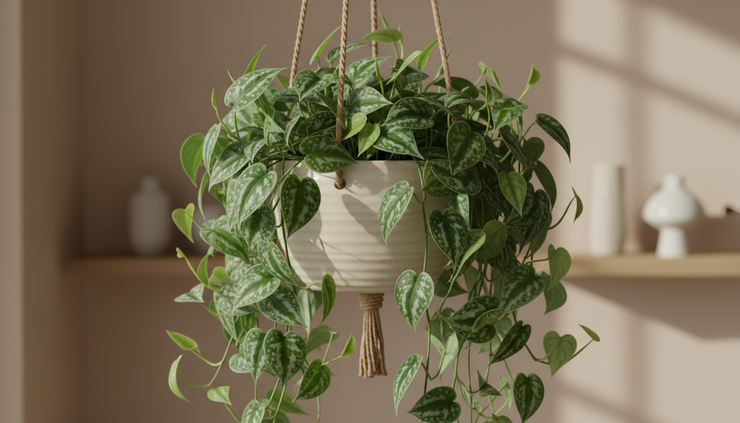
Satin pothos
Satin pothos, also called Scindapsus pictus, has velvety leaves with silver markings. It grows more slowly than classic pothos, but it brings a refined look to low and medium light rooms.
Ideal environment
It likes indirect light and appreciates slightly higher humidity. It can handle lower light, though the silver markings show best in brighter indirect light.
Care tips
Do not keep the soil soggy. Satin pothos prefers a light, airy potting mix and steady moisture without wet roots.
Styling idea
Place it where the silver leaves catch soft light, such as near an east-facing window or on a wall bracket beside a mirror.
Best hanging plants for medium light spaces
Medium light opens the door to lush plants with more texture, colour, and volume. These choices are good for bright living rooms, kitchens, and bathrooms that do not get harsh afternoon sun.
Spider plant
Spider plants are cheerful, adaptable, and easy to grow. Their arching leaves create a fountain shape, and mature plants produce baby plantlets that hang from long stems.
Ideal environment
Spider plants like medium to bright indirect light. They can handle lower light, but they grow more strongly in brighter rooms.
Care tips
Water when the top few centimetres of soil are dry. Brown tips can come from dry air, inconsistent watering, or mineral-heavy water. If your tap water is hard, try rainwater or filtered water now and then.
Styling idea
A spider plant looks best where the plantlets can dangle freely. Hang one in a kitchen window, bathroom, or family room where its playful shape adds energy.
Boston fern
Boston ferns bring softness and volume. Their fronds can make a hanging basket look full and classic, especially in bathrooms or sunrooms.
Ideal environment
Boston ferns prefer bright indirect to medium light and higher humidity. They dislike dry air and dry soil.
Care tips
Keep the soil lightly moist, not soaked. Mist if the air is dry, or place the pot near other plants to create a more humid microclimate. Trim brown fronds at the base to keep the plant tidy.
Styling idea
Use Boston ferns in bathrooms with natural light, covered balconies during warm months, or cottage-style interiors. They pair beautifully with beadboard, vintage hooks, and natural fibres.
Lipstick plant
Lipstick plants have glossy leaves and tubular flowers that can appear from deep red buds. They are less common than pothos, but they are an excellent choice for hanging planters.
Ideal environment
They like medium to bright indirect light. More light usually means better flowering, as long as the plant is not getting scorched.
Care tips
Let the top of the soil dry before watering. Use a well-draining mix, and avoid moving the plant too often once buds form.
Styling idea
Hang a lipstick plant where blooms can be seen up close, such as beside a breakfast nook or near a bathroom window.
Best hanging plants for bright indirect light
Bright indirect light is the sweet spot for many of the most beautiful trailing plants. These varieties often need more light to keep their shape, colour, and compact growth.
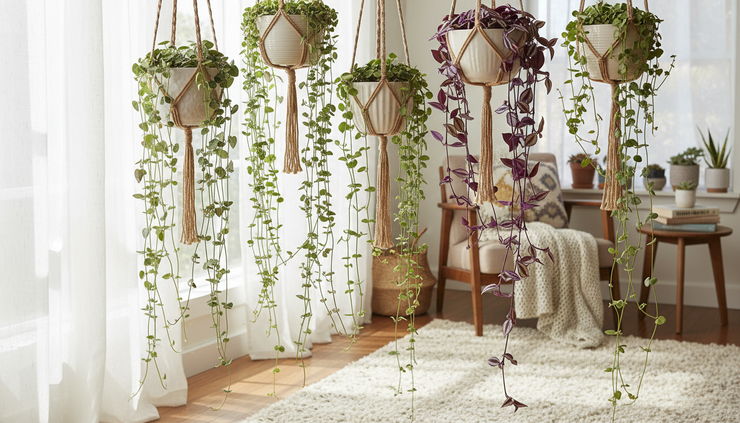
String of hearts
String of hearts is delicate, graceful, and surprisingly tough once established. Its small heart-shaped leaves grow on thin trailing stems, often with soft silver patterning.
Ideal environment
It likes bright indirect light and can handle some gentle morning sun.
Care tips
Let the soil dry quite a bit between waterings. The tubers store water, so overwatering is the main risk. If vines become sparse, trim them and place the cuttings back into the pot to thicken the top.
Styling idea
String of hearts looks beautiful in a narrow window, on a high shelf, or in a small hanging planter where the long strands can fall like a curtain.
Hoya
Hoyas are loved for thick, waxy leaves and clusters of fragrant flowers on mature plants. Popular types include hoya carnosa, hoya compacta, and hoya linearis.
Ideal environment
Hoyas prefer bright indirect light. Some can take a little direct sun, especially in the morning.
Care tips
Let the soil dry between waterings. Use a chunky mix with bark or perlite so roots get air. Do not cut off old flower spurs, since many hoyas rebloom from the same points.
Styling idea
Hang hoyas close enough to appreciate their leaves. A simple brass, wood, or ceramic planter suits their sculptural look.
Tradescantia
Tradescantia grows quickly and brings strong colour. Purple, silver, green, and striped varieties add contrast to neutral rooms.
Ideal environment
It needs bright indirect light for the best colour. Too little light can make the stems weak and faded.
Care tips
Pinch stems often to keep the plant full. Tradescantia can get leggy over time, so refresh it with cuttings when needed.
Styling idea
Use tradescantia where you want colour without flowers. It suits modern shelves, sunny kitchens, and playful rooms.
Best hanging plants for sunny windows
Sunny windows can be harsh, especially south-facing and west-facing windows in summer. Choose plants with thick leaves or succulent growth, and introduce them to direct sun gradually.
String of pearls
String of pearls is a striking succulent with bead-like leaves that trail over the pot. It needs more light than many people expect.
Ideal environment
Bright light is best, with some direct morning sun or filtered sun. A very dim room will usually lead to weak growth.
Care tips
Use a cactus or succulent mix and a pot with drainage. Water deeply, then let the soil dry before watering again. Avoid leaving water sitting in the crown of the plant.
Styling idea
Place string of pearls in a small hanging pot near a sunny window where the strands can trail freely. It looks especially good in minimalist rooms.
Burro’s tail
Burro’s tail has plump, overlapping leaves that form long trailing stems. It is beautiful but delicate, since the leaves drop easily when bumped.
Ideal environment
It likes bright light and can handle some gentle direct sun. A south or west window with filtered light can work well.
Care tips
Water sparingly and handle as little as possible. Give it a stable spot where people, pets, and curtains will not brush against it.
Styling idea
Hang it in a quiet, sunny corner. Its texture looks great against terracotta, stone, and warm wood.
Rhipsalis
Rhipsalis is a jungle cactus with thin, branching stems that drape nicely from baskets. Unlike desert cacti, it prefers filtered light and a bit more humidity.
Ideal environment
Bright indirect light works best. It can handle some morning sun, but avoid strong afternoon heat.
Care tips
Water when the upper soil dries. Use a loose mix and avoid cold drafts in winter.
Styling idea
Rhipsalis suits relaxed, organic interiors. Hang it with woven shades, linen curtains, and natural wood for an easy, earthy feel.
Make hanging plants easier to care for and better to look at
A hanging plant has to work in two ways. It needs to survive in its spot, and it needs to look intentional. A few small choices can make the whole display feel polished.
Pick the right planter
Choose a planter that suits both the plant and your home. Lightweight plastic nursery pots are practical inside decorative baskets because they drain well and can be removed for watering.
Good hanging planter options include:
Macrame hangers for relaxed, boho, or casual rooms
Ceramic hanging pots for clean, modern spaces
Woven baskets with a liner for warmth and texture
Wall-mounted planters for tight corners and hallways
Ceiling hooks for long vines that need room to trail
Always match the hook and hardware to the weight of the watered plant. Wet soil is heavy. If you are unsure, use a wall stud, ceiling joist, or proper anchor.
Water without making a mess
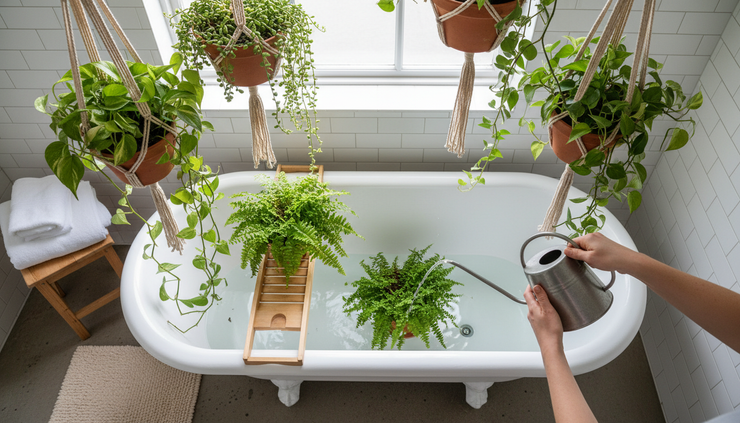
Watering is the biggest challenge with hanging plants. If the pot has drainage, take it down and water it in the sink or tub. Let it drain fully before hanging it again.
If taking the plant down is difficult, use a watering can with a long narrow spout and keep a saucer or cachepot under the nursery pot. Check after watering so excess water does not sit against the roots.
Group plants with similar needs
A hanging display looks better when plants share the same care needs. Pair pothos with philodendron in a lower-light room. Group string of hearts with hoya near a bright window. Keep moisture-loving ferns away from dry, sunny succulent baskets.
This also makes care less confusing. One area might need frequent watering, while another can dry out longer.
Use plants to shape the room
Hanging plants can solve design problems as much as décor problems.
Use them to:
Soften a blank corner
Frame a window without heavy curtains
Add height above a sofa or console
Draw attention to a bathtub or reading chair
Break up a long hallway
Bring life to rental spaces without changing the walls too much
For a balanced look, mix leaf shapes. Pair large heart-shaped leaves with fine vines, arching spider plants, or bead-like succulents. The mix keeps the display from looking flat.
Bring more greenery into your home with confidence
The best indoor hanging plants are the ones that fit your real home, not just a perfect photo. If your room is dim, start with pothos or heartleaf philodendron. If it is bright and warm, try hoya, string of hearts, or string of pearls. If you have a humid bathroom with a window, a Boston fern can make the space feel fresh and calm.
Start with one or two plants and learn their rhythm. Watch how the leaves respond to light. Feel the soil before watering. Trim vines when they get thin. Once the first baskets settle in, it becomes easier to build a hanging plant display that feels natural, healthy, and personal.
Indoor plants add colour, texture, and a welcome sense of life to everyday rooms. Hung at the right height and matched to the right light, they turn unused airspace into one of the most beautiful parts of the home.


Comments