5 Stunning Fall Bouquets to Inspire Your Autumn Floral Designs
Autumn flowers have a way of making a room feel warmer before anyone even lights a candle. The season brings deep colour, sculptural seed pods, soft grasses, glossy berries, and leaves that look beautiful even as they fade. A fall bouquet can be polished and elegant, loose and garden-gathered, or moody enough to suit a rainy October table.
The best part is that autumn arrangements do not need to feel perfect. In fact, they often look better with a little movement and surprise. A bent branch, a curling maple leaf, a few rose hips, or a spray of crabapples can turn familiar flowers into something memorable.
Below are five fall bouquet ideas that capture the season in different ways, along with practical tips for choosing seasonal blooms, building rich colour palettes, and adding natural texture.
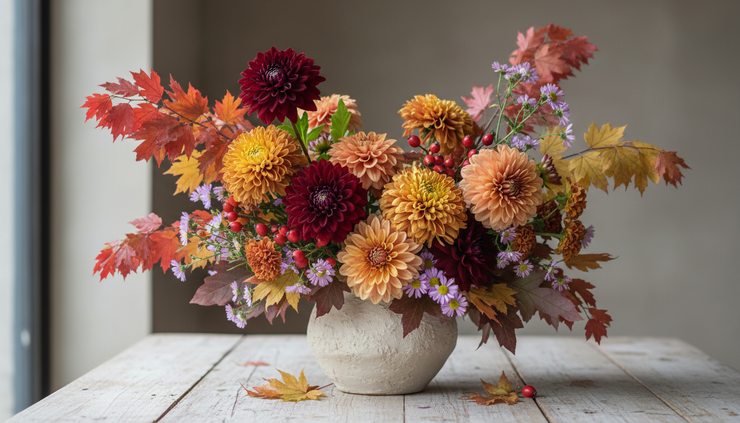
Start with the flowers autumn gives you
A strong fall bouquet begins with seasonal materials. Flowers grown or commonly available in autumn tend to match the mood of the season without much effort. They also pair naturally with branches, foliage, and berries.
Look for flowers with weight, depth, and shape. Good choices include:
Dahlias
Chrysanthemums
Asters
Sunflowers
Rudbeckia
Marigolds
Zinnias in late season
Celosia
Amaranthus
Roses in deeper shades
Hydrangeas, especially those that have aged to green, burgundy, tan, or dusty pink
For greenery and texture, fall offers plenty beyond standard filler. Try eucalyptus, ninebark, smokebush, oak leaves, maple leaves, fern, ornamental grasses, wheat, millet, seed pods, dried hydrangea, and vines.
A useful rule is to choose one focal flower, two supporting flowers, and two or three textural elements. That keeps the bouquet full without making it crowded.
Colour matters too. Autumn palettes work best when they feel layered rather than flat. Instead of choosing only orange and yellow, add contrast with plum, cream, rust, copper, chocolate brown, olive green, or soft blush. Even one unexpected shade can make the whole bouquet feel more designed.
Five fall bouquets to try this season
Each of these arrangements has a distinct mood. Use them as starting points, then change the flowers based on what is available at a florist, market, garden centre, or in your own backyard.
1. A golden harvest bouquet feels warm and welcoming
This is the classic autumn arrangement, but it does not have to look predictable. Start with golden sunflowers or bronze chrysanthemums, then add rust-coloured dahlias, marigolds, and a few stems of wheat or millet. Tuck in maple leaves, oak leaves, or beech branches for structure.
The key is to keep the colour rich rather than overly bright. Choose golden yellow, burnt orange, copper, and soft brown. A few cream flowers, such as small roses or mums, can calm the palette and stop it from feeling too intense.
This bouquet works beautifully in a stoneware pitcher, a low ceramic vase, or even a wide glass jar wrapped with twine. It suits a Thanksgiving table, entryway console, or kitchen island.
Design tip: Let the grasses rise slightly above the flowers. That airy height keeps the bouquet from looking too heavy.
Natural elements to add:
Wheat stems for a harvest feel
Oak leaves for shape
Small crabapples on branches for colour
Dried seed pods for a rustic finish
A golden harvest bouquet is also forgiving for beginners. If the stems sit at slightly different heights, the arrangement still looks intentional because the style is loose and abundant.
2. A moody dahlia bouquet brings drama to fall flowers
For a more dramatic look, build a bouquet around dark dahlias. Burgundy, plum, wine, and deep red varieties feel luxurious without needing many extra flowers. Pair them with chocolate cosmos if available, dusty pink roses, amaranthus, and dark foliage such as ninebark or smokebush.
This is one of the most striking fall bouquet ideas because it leans into the season’s darker side. Think late sunsets, cool evenings, and candlelit dinners. The mood is rich, but the bouquet should still have softness.
To keep it from looking too heavy, add a few lighter accents. Cream asters, pale blush roses, or faded hydrangea can create contrast. A small amount of bronze foliage will also warm up the deeper colours.
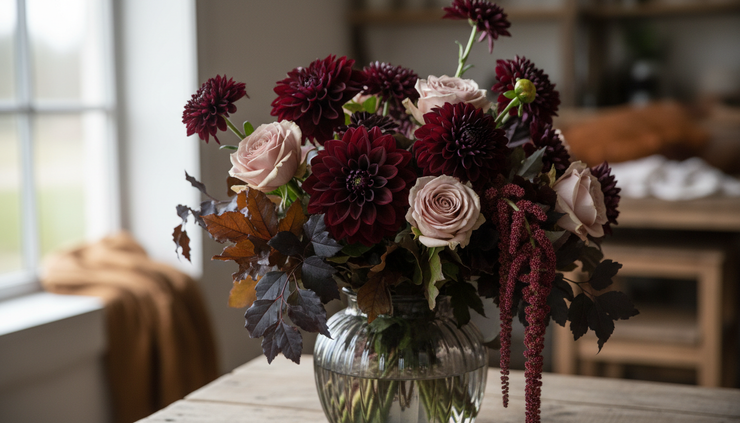
Design tip: Place the darkest flowers slightly lower in the bouquet, then let lighter blooms sit near the top and edges. This gives the arrangement depth and prevents one colour from taking over.
Natural elements to add:
Rose hips for red-orange detail
Smokebush for smoky texture
Dark maple leaves for seasonal movement
Amaranthus for a trailing shape
This bouquet looks especially good in a footed compote or a dark glass vase. It feels formal enough for a dinner party, yet wild enough to stay relaxed.
3. A woodland bouquet looks gathered from a forest walk
A woodland-inspired bouquet is all about texture. Flowers still matter, but foliage, branches, berries, and seed pods do much of the work. Start with cream chrysanthemums, pale asters, or faded hydrangeas. Then add ferns, oak leaves, eucalyptus, grasses, and branches with berries.
The colour palette should feel earthy. Use moss green, tan, cream, chestnut, rust, and muted burgundy. This arrangement works well when the flowers are not too perfect. Slightly curled leaves and asymmetrical branches make it more interesting.
Berries are especially useful here. Rose hips, viburnum berries, snowberries, or hypericum berries can add small points of colour. If foraging, identify plants carefully and avoid anything protected, sprayed, or unfamiliar. Some berries and branches can be unsafe for pets or children, so place arrangements with care.
Design tip: Build the shape with branches first. Once the outline feels right, add flowers into the open spaces.
Natural elements to add:
Ferns for softness
Acorns attached to small oak twigs
Dried grasses for fine texture
Berries for small seasonal accents
Moss around the base in a low bowl
A woodland bouquet is ideal for anyone who likes a natural, less polished look. It also helps stretch a smaller flower budget because foliage and branches can create generous volume.
4. A sunset bouquet captures the glow of autumn evenings
This bouquet takes its cue from the sky. Instead of using only traditional fall colours, blend apricot, peach, coral, amber, and soft pink with touches of wine or bronze. Dahlias are perfect for this style, especially when mixed with zinnias, roses, celosia, and Japanese anemones.
The result feels warm and romantic, not overly themed. It is a lovely choice for birthdays, autumn weddings, or a simple weekend arrangement that brightens a grey day.
To make the palette work, repeat each colour at least twice. For example, use peach roses, peach dahlias, coral zinnias, and amber celosia. Then add bronze foliage to tie everything together. If one flower is much brighter than the rest, balance it with a deeper shade nearby.
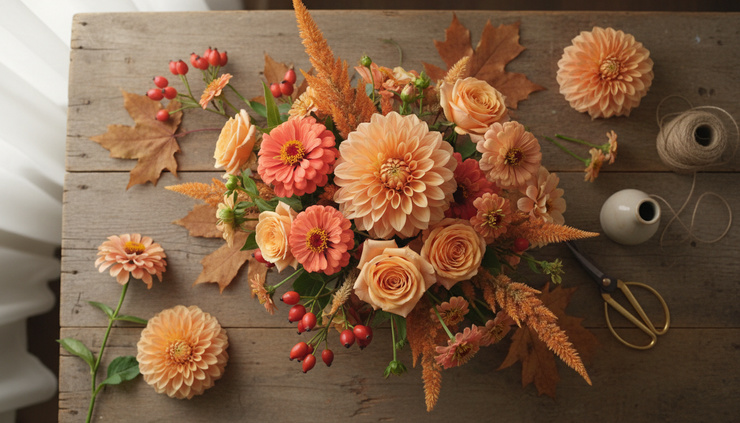
Design tip: Use transition colours. Blush, caramel, and dusty rose help connect peach flowers to deeper burgundy or bronze accents.
Natural elements to add:
Copper beech leaves for warmth
Rose hips for a reddish accent
Dried hydrangea for muted texture
Soft grasses for movement
A sunset bouquet looks beautiful in a warm-toned vase, such as terracotta, amber glass, or aged brass. If the colours feel too sweet, add a few dark stems to ground the design.
5. A minimalist fall bouquet makes one material shine
Not every fall bouquet needs to be full and overflowing. A minimalist arrangement can be just as seasonal, especially when it highlights one striking flower or natural element.
Try a tall vase with a few branches of turning leaves and three large dahlias. Or use a narrow ceramic vessel filled with cream chrysanthemums, dried grasses, and a single branch of berries. The empty space becomes part of the design.
This style works best when each stem has a strong shape. Look for flowers with clean outlines and foliage with interesting curves. Japanese maple branches, curly willow, dried allium, and bare branches with berries can all look beautiful in simple arrangements.
A minimalist bouquet is a good choice for small spaces, bedside tables, shelves, or modern dining rooms. It also suits the late part of the season, when gardens begin to thin out and branches become more visible.
Design tip: Edit more than you add. If a stem does not improve the shape, leave it out.
Natural elements to add:
One dramatic branch with coloured leaves
A few stems of ornamental grass
Bare twigs for line
Hypericum berries for small detail
Dried seed heads for sculptural shape
This is a great arrangement for experimentation because it teaches balance. Move one stem at a time and watch how the whole bouquet changes.
Choose colour and texture with confidence
Autumn gives you permission to mix materials that may not work in spring or summer. Soft petals can sit beside rough bark. Glossy berries can brighten dried grasses. Faded hydrangeas can make fresh dahlias feel more grounded.
A balanced bouquet usually includes a mix of these four elements:
Element | What it does | Fall examples |
Focal flowers | Create the main visual impact | Dahlias, sunflowers, chrysanthemums, hydrangeas |
Supporting flowers | Fill space and repeat colour | Asters, roses, zinnias, marigolds |
Texture | Adds interest and depth | Celosia, grasses, seed pods, amaranthus |
Structure | Gives shape and movement | Branches, leaves, vines, berry stems |
When choosing colours, start with one mood. Warm and rustic calls for amber, rust, cream, and olive. Moody and elegant calls for burgundy, plum, blush, and brown. Soft and romantic calls for peach, caramel, dusty pink, and bronze.
If you feel stuck, choose one branch of autumn leaves first. Let the leaves guide the palette. A maple branch might include red, orange, gold, and green all on one stem, giving you a ready-made colour plan.
Bring leaves, berries, and branches into the design
Natural elements are what make fall bouquets feel alive. They add movement, seasonality, and a little imperfection. The trick is to use them with intention.
Leaves can frame the bouquet, soften the vase edge, or create a wide shape. Strip any leaves that will sit below the waterline, since they can break down quickly and cloud the water.
Berries add small dots of colour. They are especially helpful when a bouquet needs contrast but not another large bloom. Use them in odd clusters and place a few near the centre as well as the outer edges.
Branches create height and gesture. Add them early, before delicate flowers, so they form the structure. If a branch is too stiff, try placing it off-centre rather than straight up and down.
Dried elements can last long after the fresh flowers fade. Wheat, grasses, seed heads, and dried hydrangea all work well in fall arrangements. Mix them with fresh flowers, or save them to make a second, longer-lasting display.
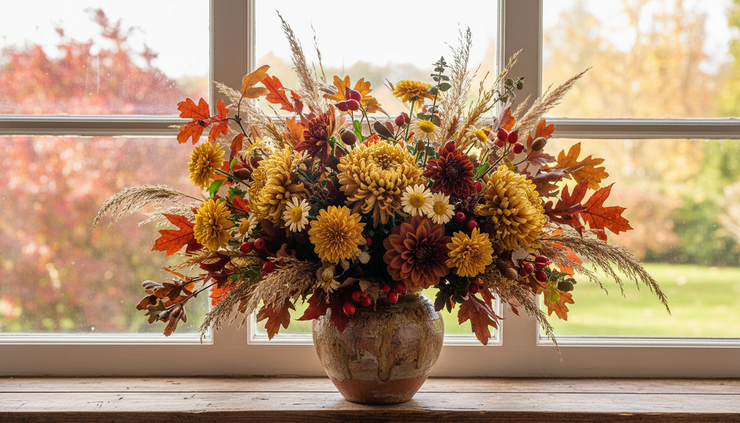
Make the design your own
The most charming fall bouquets often come from small experiments. Switch orange for peach. Add a crooked branch. Let grasses lean to one side. Pair fresh dahlias with dried seed pods. Place a single dark flower where the eye does not expect it.
Before arranging, lay all your materials on a table and group them by colour and texture. Start with the largest stems, then add supporting flowers, then tuck in the details. Step back often. A bouquet can look different from a distance than it does in your hands.
Keep the water clean, trim stems at an angle, and remove fading flowers as they go. Many fall arrangements can be refreshed over several days by adding new foliage or replacing one tired bloom.
Autumn floral design rewards curiosity. Use the season as an invitation to play with colour, shape, and texture. Whether the bouquet is full of golden chrysanthemums or built from three perfect branches, the goal is the same: create something that feels warm, personal, and alive.


Comments